Skip to content
Yulin
New ArrivalsJadeiteAI AtelierOur StoryReviewsMember CornerFAQContact
EN/ 中文

Yulin

Where jade meets a thousand stories

Explore

New ArrivalsJadeiteAI AtelierOur StoryReviewsMember CornerFAQContact

Care & policies

CertificatesCare & sizingTerms & conditionsPrivacy & business details

Based in

Kuala Lumpur, Malaysia

© 2026 Yulin · SSM registration no. to be added

Understanding jadeite

The Gem of Heaven

What is jadeite?

Jadeite is one of two distinct minerals commonly known as jade, the other being nephrite. While nephrite has a long history, particularly in China, jadeite is the rarer, more precious and more vibrant of the two.

It is a pyroxene mineral, prized for its incredible toughness and the vast spectrum of colours it can display.

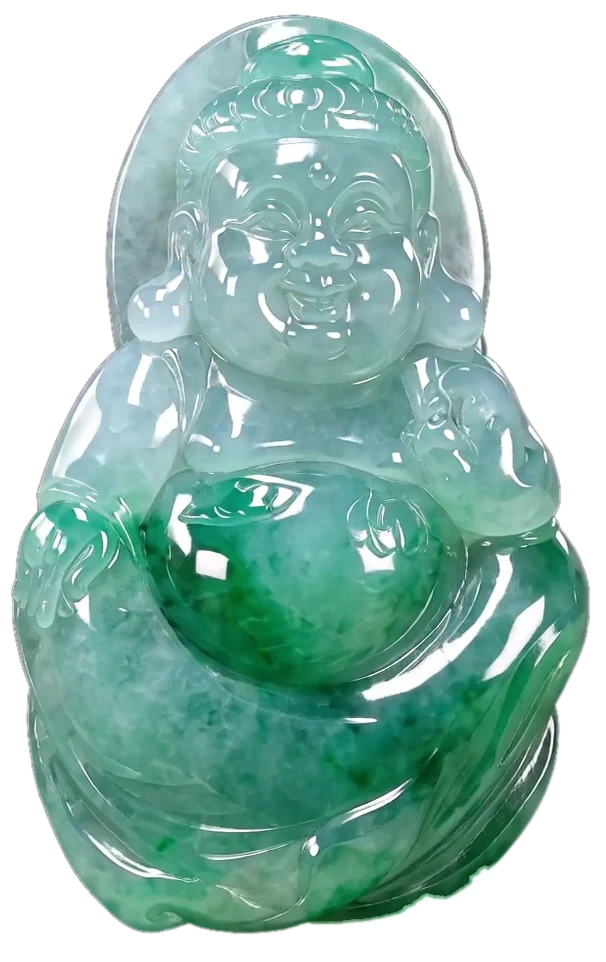
A carved jadeite pendant turning slowly under soft light, showing its translucency and green colour

History

The King of Jade

Discovered in Burma (Myanmar) in the 18th century, jadeite quickly captured the hearts of connoisseurs, particularly within the Qing Dynasty of China.

It became known as the “King of Jade” (玉石之王) for its superior hardness and its ability to achieve a glassy, almost luminous quality, known as its “water” or “iciness”.

Origin

Why Burmese jadeite?

Myanmar is the world’s primary and most prestigious source of gem-quality jadeite. The geological conditions there are perfect for creating stones with exceptional colour saturation and translucency.

The most coveted shade is the legendary “Imperial Green”, a vivid, emerald-like colour that is extraordinarily rare.

The 4Cs of jade

Decoding the value of jadeite

The value of a jadeite piece is determined by a combination of factors, often referred to as the “4Cs” of jade.

  1. Colour

    The most important factor. Vivid, saturated and uniform colours are most valuable. Imperial Green is the pinnacle, but other prized colours include Lavender, Red, Yellow and Ice (colourless or white).

  2. Clarity & Texture

    The finest jadeite is highly translucent, allowing light to pass through it and giving it a glow. The texture should be fine and smooth, free of visible internal flaws, cracks or impurities.

  3. Cut

    Because jadeite is so tough, it can be carved into intricate shapes. A skilled cutter can maximise the stone's colour and translucency. Symmetry and a high polish are key indicators of quality.

  4. Craftsmanship

    For jewellery, the setting and design are crucial. A beautiful setting enhances the stone, while a masterful carving can turn a piece of jade into a true work of art.

The most important term

What is “Grade A” jade?

“Grade A” refers to jadeite that is 100% natural. It has only been cut and polished, with no chemical treatments (like bleaching or resin impregnation, known as Grade B) and no artificial colour (Grade C). Our collection consists exclusively of certified Grade A jadeite, guaranteeing its natural beauty.

GRADE A JADE(Natural)UNALTERED STRUCTURE & COLORNatural mineralinclusionsVariagienalcloudsIntact fibrousstructure(cotton-like fibers)Organic colordistributionCabochonnetification

Grade A

Yulin’s grade
Treatment
None beyond cutting, polishing and traditional wax
Colour
Natural

What it means

Untreated stone. Original mineral structure fully preserved. Only surface waxing permitted. The highest standard available. The only grade Yulin offers.

GRADE B JADE(Treated - Bleached & Polymer Impregnated)BRIGHTENED COLOR,DAMAGED STRUCTUREAcid-etching patterns(Orange peel texture)SpiderwebcracksOrange peeltexturePolymer-filledmicro-fissures

Grade B

Treatment
Acid bleached, then impregnated with polymer
Colour
Natural, but the resin can yellow over time

What it means

Structure weakened by the treatment. Grade B Jade undergoes a two-stage industrial treatment. First, concentrated acids flush out iron staining, dark inclusions, and impurities from within the stone. This bleaching opens microscopic cavities throughout the crystal structure.

GRADE C JADE(Dyed)ARTIFICIAL COLORATION‘too-good-to-be-true’Dye concentrationin fracturesColor veinsalong fissuresDyed internalmicro-cracks

Grade C

Treatment
Dyed, often after bleaching
Colour
Artificial and may fade

What it means

Colour is not natural. Grade C jade has been artificially dyed to enhance or change its colour. Dyeing typically follows acid treatment, which opens the stone’s pores and allows dye to penetrate deeper. This means many pieces sold as C jade are technically B+C — both bleached and dyed.

Craftsmanship

The craftsmanship workflow

Jade craftsmanship relies on abrasion rather than traditional cutting, turning raw boulders into polished art through a multi-stage grinding workflow.

View the collectionHow to read a certificate
  1. 01

    Stone Evaluation

  2. 02

    Stone Slicing

    相玉 · Xiang Yu

  3. 03

    Design & Ink Mapping

    画样 · Hua Yang

  4. 04

    Rough Shaping

    出坯 · Chu Pi

  5. 05

    Fine Carving & Detailing

    细作 · Xi Zuo

  6. 06

    Sanding & Polishing

    抛光 · Pao Guang